Essay · Rio de Janeiro
Where the year actually turns
Réveillon on Copacabana, from the night I spent there in 2018. White clothes, the sea, and the fireworks. What still holds if you go.
By Val Okolu · 2 January 2019 · 6 min · Issue No. 11
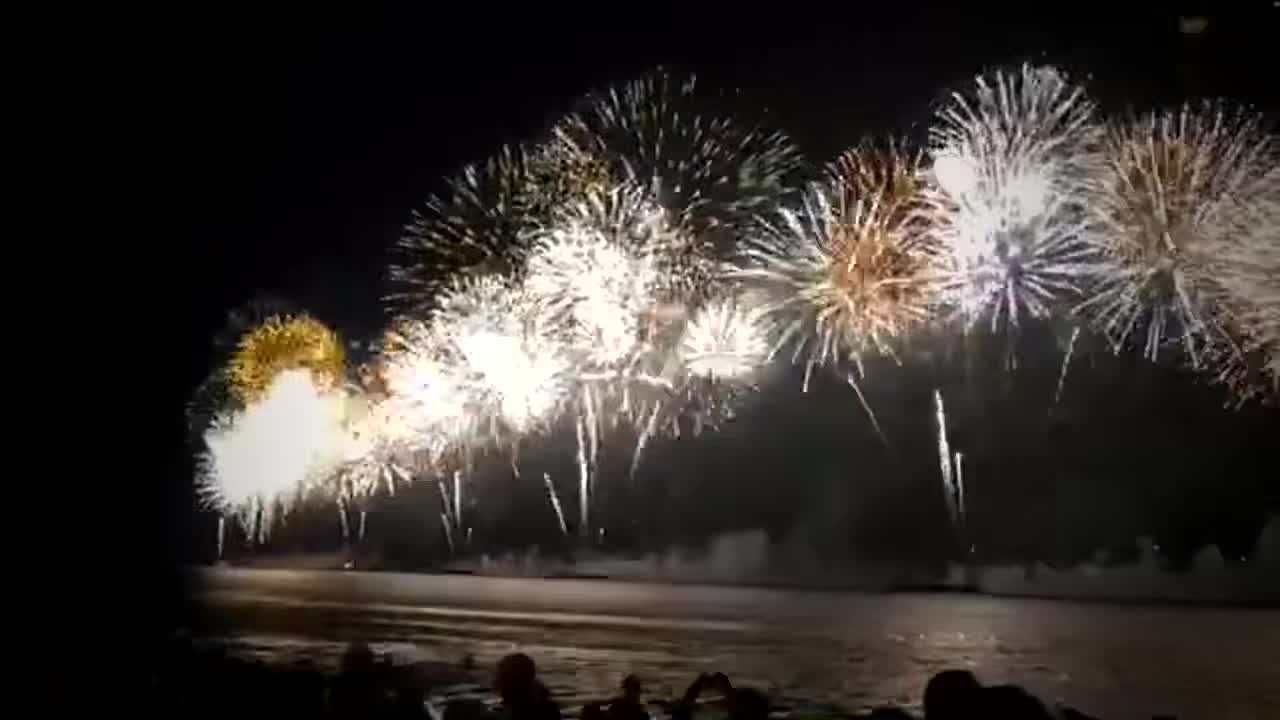
On New Year’s Eve, Rio does not go inside. Copacabana becomes the largest room in the country: a curve of sand, a wall of hotels, and a crowd that, in a heavy year, is counted in the millions. People wear white. Many bring flowers for Iemanjá, the orixá of the sea. The devotion is older than the fireworks contract, and it is not a costume.
The fireworks are a municipal spectacle, launched over the water, usually beginning at midnight and running long enough that the first minute is not the point. Hotels facing Avenida Atlântica are booked on a cycle that has little to do with ordinary travel. If a balcony is the plan, it was the plan last January.
What to know before you treat it as a view
White clothing is customary, not a dress code enforced by anyone in particular. Flowers, perfume, and small offerings left at the water are acts of faith for many of the people beside you. Leave them intact. Do not rearrange a stranger’s offering because it would improve a photograph.
The beach is the event. Sectors, screens, and stages shift year to year along the sand. The shape - crowd, white, water, midnight - is stable. The map is not. Read the city’s current Réveillon plan before you pick a meeting point, and pick one that does not depend on crossing the entire beach at 11:40.
Arrive earlier than ambition suggests, leave a margin for the walk home, and assume that restaurants with a view are either closed or sold as fixed menus. The better table is often the next afternoon, when the city is tired and accurate again.
My rating: ★★★★★ 5/5
New Year’s Eve at Copacabana Beach was one of the most phenomenal experiences of my life, and one I believe everyone should experience at least once.
The night brought people together in white, filling the beach with a beautiful sense of celebration and possibility. I joined in the tradition of making wishes with grape seeds and preparing a small basket for Yemanjá, the goddess of the sea. There was something moving about welcoming the new year beside the water, surrounded by people sharing hopes for what was to come.
It felt joyful, meaningful, and unlike any New Year’s celebration I had experienced before. Copacabana gave the night a special kind of energy: the ocean, the traditions, the sea of white, and the feeling of beginning again together.
I went in 2018, and it remains a memory I treasure. If you have the chance to welcome the new year in Rio, this is an experience I would wholeheartedly recommend.
This story reflects my personal experience in 2018. Traditions and event details may vary from year to year.
Val Okolu · The Moment · Issue No. 11 · Invite Only