Essay · Several cities
Cities after dark
Night is when a city exaggerates. How to be out late as a guest rather than a collector, from Carnival avenues to ordinary midnights.
By Val Okolu · 17 September 2022 · 6 min · Issue No. 20
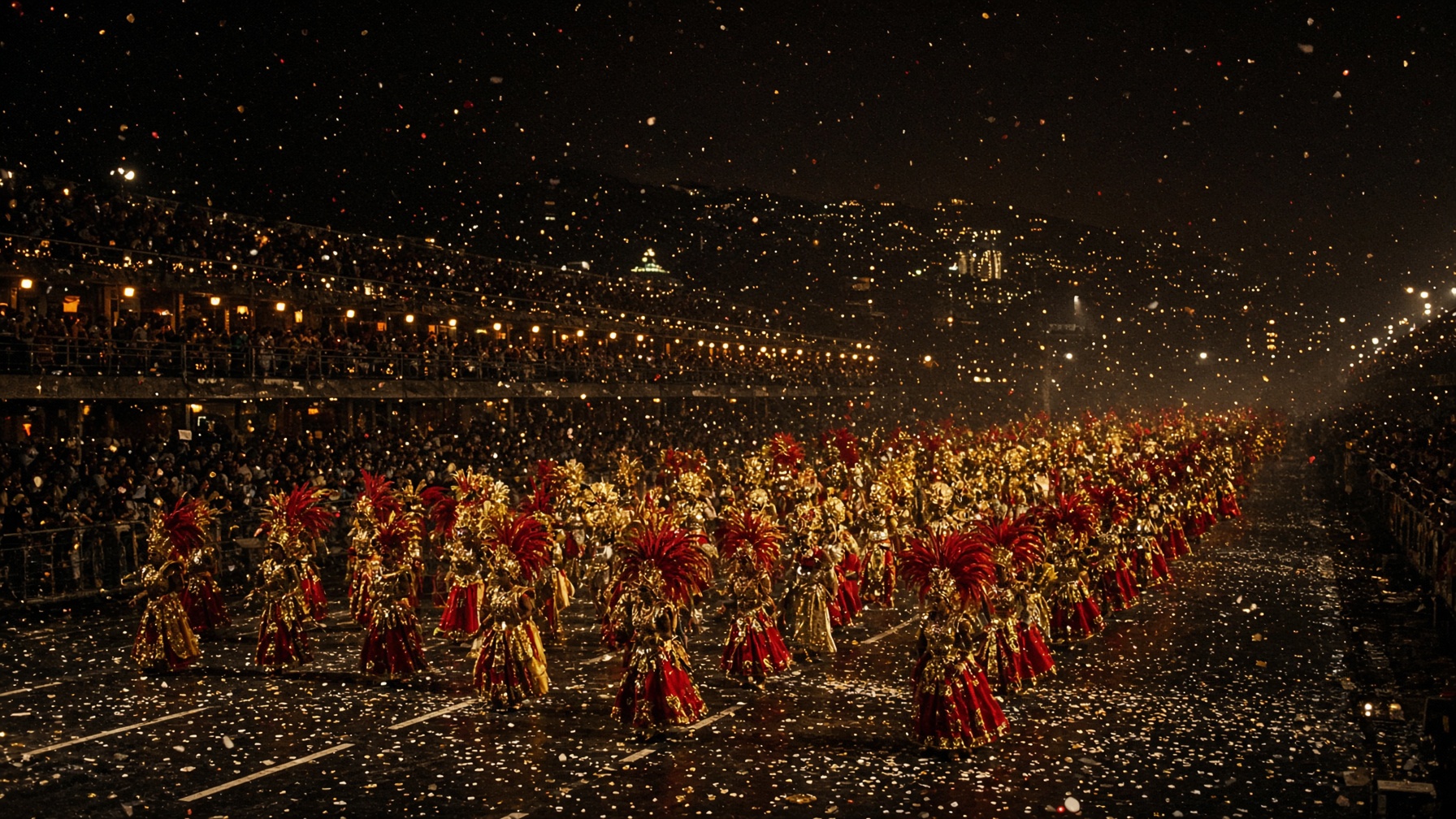
Cities lie in daylight in one direction and at night in the other. Daylight pretends to be manageable. Night pretends to be the truth. Neither is reliable, but night is when the calendar of a place becomes visible: who is in the street, what it costs to sit down, which neighborhoods have decided the evening is for them.
Carnival in Rio is the extreme case. The night is the civic product. Réveillon is the other extreme, a single midnight stretched across a beach. Most cities are quieter about it. A late dinner in Lisbon. Mexico City’s stubbornly unclosed evening. A grand prix weekend, when a harbor becomes a grandstand and midnight is just everyone going home. The method is the same. Decide what the night is for before you are in it.
A few rules that are not a personality
Have the next hour planned and the hour after that loose. Eat before the event if the event is supposed to be the meal of the day. Keep the kind of shoes you can still walk in when the plan changes. If a street has become a ritual, you are a guest in it. If a street has become a party, you are still not owed a story.
This essay is not a bar guide. Bar guides rot in a season. The useful thing is the posture: night is worth covering because culture concentrates there, not because darkness is a style.
Val Okolu · The Journey · Issue No. 20 · Invite Only