Essay · The coast
What a hotel is for
Marble is not hospitality. A reading of the sequence that actually makes a stay memorable: arrival, water, morning, and the reason you came.
By Val Okolu · 21 February 2026 · 7 min · Issue No. 32
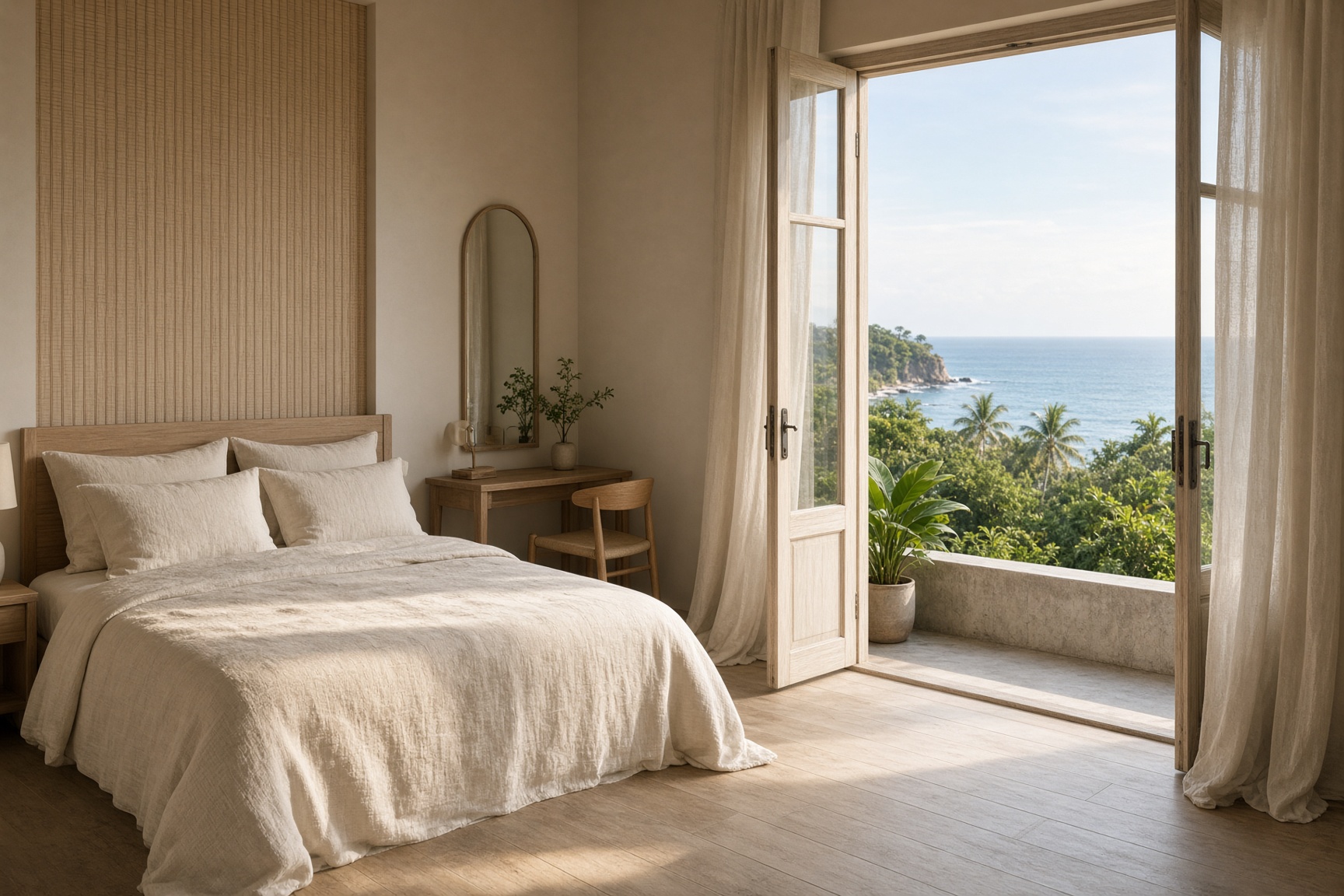
A hotel is a sequence, not a look. The photograph of the bed is the least important frame. What matters is the order of the first ten minutes: how you are met, whether the room is ready at the hour promised, whether someone has understood if you are here to sleep, to celebrate, or to disappear.
Luxury marketing has spent two decades selling spectacle - pools that photograph as infinity, lobbies scaled for a crowd that is not staying. Some of those buildings are genuinely good. Many are loud about materials and quiet about care. The memorable ones can be grand or small. They share a point of view.
Three rooms, three jobs
The beachfront palace has one job: to be the city’s drawing room, with the ocean as the real lobby. The hillside house has another: to make the city legible from above, and to return you to it before the evening turns careless. The new design hotel has a third, and it is the one most often failed - to be as kind at midnight as it was at the hour the photographer arrived.
Service is specific. It is the glass of water that shows up without a speech. It is a desk that can say, plainly, which night the street will be impassable. It is a room that holds morning light instead of fighting it.
Ask what the hotel is for. If the answer is only the photograph, you already have the photograph.
Elsewhere in the archive we look at two Rio houses - the Copacabana Palace and Fasano - as design, not as disguised reviews of a stay. The standard is the one we use everywhere. We do not invent a night we did not spend.
Val Okolu · The Stay · Issue No. 32 · Invite Only