Design note · Kyoto
The ryokan morning
What a ryokan is sequencing: shoes, bath, the meal, the futon, the morning. A design note on a kind of hotel that is also a set of manners.
By Val Okolu · 3 April 2018 · 6 min · Issue No. 8
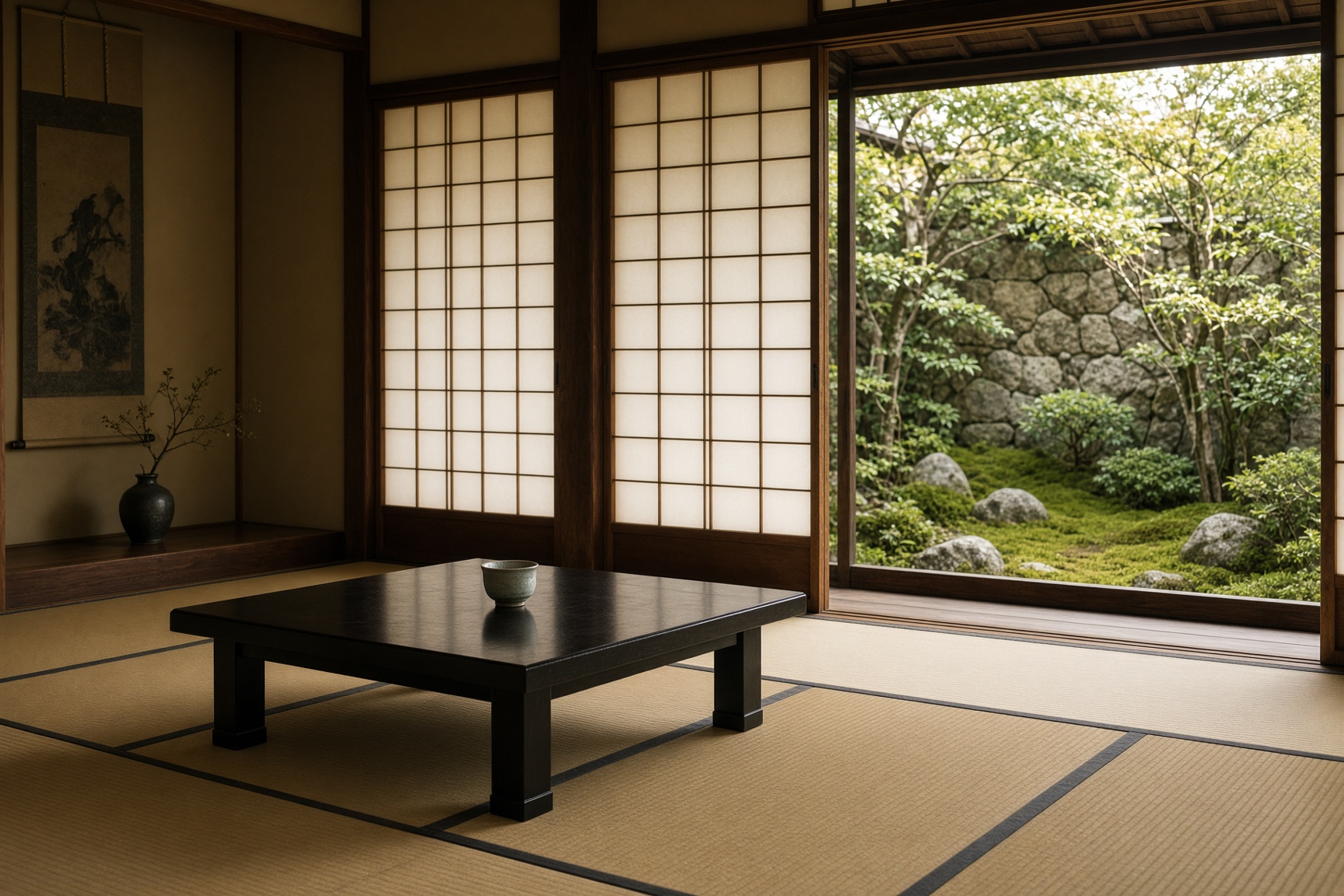
A ryokan is a hotel that has kept a sequence most modern houses broke apart. You leave your shoes. You are shown into a room that is empty on purpose - tatami, a low table, a view of a garden that is working as hard as any lobby. Later someone will lay the futon where you sat. The room changes jobs without changing size.
The bath is not a spa flourish. You wash before you soak. Tattoos, in many houses, remain restricted or require a private bath; the policy is the house’s, it varies, and it should be read before you arrive rather than discovered at the door. Kaiseki, the formal meal, is a procession of small courses tied to the season. It is the hotel’s thesis. If you need dinner to be quick, you have booked the wrong thesis.
Morning is the point
People remember the bath and the meal. The distinguishing hour is the morning, when the shutters open and the garden is doing very little, very precisely. Tea, the particular quiet of a wooden corridor, a garden raked by someone who does not need you to watch. This is hospitality as tempo.
We file this as a design note, not a stay. The customs described are the published manners of the form. A specific house in Kyoto or elsewhere will have its own. Ask. The form is strict so that the morning can be soft.
Val Okolu · The Stay · Issue No. 8 · Invite Only